Bacteriophages

How Bacteriophages Overcome Antibiotic Resistance

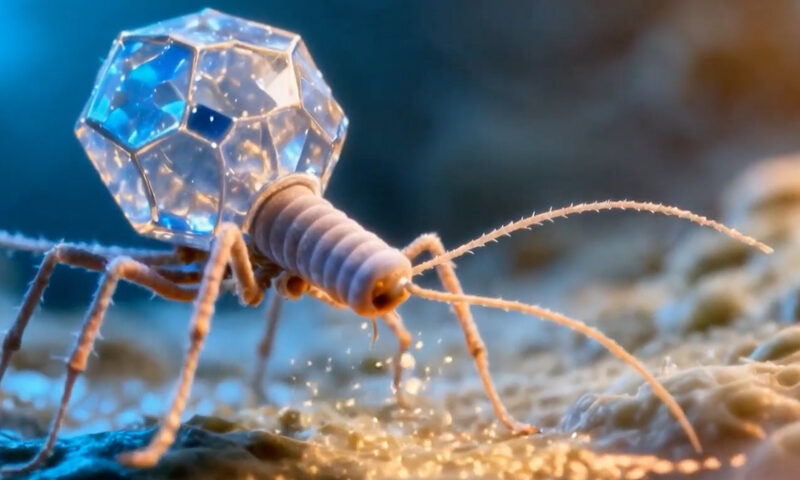
Bacteriophages, or phages, are viruses that specifically infect and destroy bacteria, presenting a potential solution for treating antibiotic-resistant infections. These microscopic entities operate by attaching to bacterial cells, injecting their genetic material, and using the host's machinery to replicate. This process culminates in the lysis, or bursting, of the bacterial cell, releasing new phages to continue the cycle.


Immunization Part 1- How Vaccines Changed the World

Immunization has become a vital part of public health and disease prevention, and yet, it remains a controversial topic in our society today. Diseases that were once responsible for significant morbidity and mortality have now become all but eradicated, thanks to the introduction of vaccines. Immunization has contributed to increased life expectancy and improved quality of life.

Immunization Part 2 – How Vaccines Work

A vaccine is a biological product that can be used to safely induce an immune response that confers protection against an infection and/or disease on subsequent exposure to a pathogen. To achieve this, the vaccine must contain antigens that are either derived from the pathogen or produced synthetically to represent components of the pathogen.

Cancer Vaccines

Immunization Part 3 – The future Of Personalized Cancer Vaccines

The integration of high-throughput technologies and big data analytics is revolutionizing vaccine research.  Multi-omics approaches—such as transcriptomics, proteomics, and metabolomics—enable a deeper understanding of immune responses at a cellular and molecular level. AI and machine learning algorithms further enhance vaccine design by predicting antigenic targets and optimizing formulations.

It’s not the Vaccines it’s the Virus

Viral mutation rates play a pivotal role in vaccine development. Mutation rate refers to how often genetic changes occur in a virus’s genome during replication. All vaccines trigger immunity, but how long it lasts depends on several factors. One of the important ones is the rate at which a virus replicates. If a virus replicates quickly, it has a chance to produce more mutations, also known as variants. The more variants emerge, the harder it is to make a vaccine that will create lasting immunity, because the target keeps moving. If a virus is stable, that gives us a big advantage. Measles is an example of a stable virus that is unlikely to replicate, so scientists could predict that immunity would last a long time, which it does." Smallpox and polio, highly contagious viruses that were almost eradicated through vaccination, are also stable with low mutation rates.