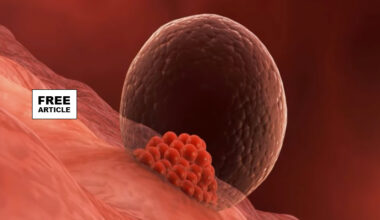
The name progesterone is self-explanatory, it is the Pro Gestational Hormone, essential for pregnancy. However, this steroid hormone is far more than a gestational agent. Progesterone is recognized as a key physiological component of not only the menstrual cycle and pregnancy but also as an essential precursor of other gonadal and non-gonadal hormones such as aldosterone, cortisol, estradiol, and testosterone. Based on current findings, progesterone and novel progesterone-based drugs have many important functions, including contraception, treatment of dysfunctional uterine bleeding, immune response, and prevention of cancer.
Reproduction
Reproduction and life are not possible without progesterone; thus, a better understanding of this essential molecule could enable safe and effective use of this hormone in many clinical conditions.
Progesterone is primarily known as the pregnancy hormone, and most of its function relates to maintaining pregnancy specifically by preparing the endometrium, decreasing myometrial contractions for implantation, promoting gestation, and inhibition of lactation during pregnancy. It also plays a role in the menstrual cycle, causing capillary growth and development with the result of increased vascularization and blood flow.
Progesterone also causes an increase in the mucous lining the cervix, resulting in a thick impenetrable barrier preventing sperm penetration. To ensure pregnancy sperm should be residing in the cervical cervices prior to ovulation where they are shunted by retrograde (upward) uterine contractions at regular intervals, approximately six per minute. Sperm can reside in the cervical crevices for up to 4 days. Sperm must be there prior to ovulation when the progesterone blocks the cervical entrance and prevents further penetration. Simply put the sperm can wait for the egg but the egg with a short life-expectancy of 24 hour can’t wait for the sperm.
The properties of increased mucus secretion and thickening of the cervical mucus by progesterone provide a clinically relevant rationalization for progestin-dependent contraceptives. The mucosal thickening in the cervix by progesterone also plays an important role in innate immunity by establishing a barrier to pathogens and secreting immune cells such as leukocytes during pregnancy.
In the non-pregnant women, the corpus luteum a hormone secreting structure that develops in the ovary after an ovum, egg, has been released from the dominant follicle is the primary source of progesterone. The corpus luteum has 2 fates depending on whether there is a fertilized egg. If fertilization and implantation occur, by day 9, the embryo at the blastocyst stage secretes Human Chorionic Gonadotropin (HCG). The hormone Human Chorionic Gonadotropin (HCG) is produced by the embryo’s trophoblast cells (cells which will later become the placenta). This same embryo produced hormone HCG is the basis for pregnancy tests when it is absorbed by the mother and appears in her blood and urine. HCG also is vital in the continuation of progesterone secretion from the corpus luteum.
Progesterone is critical in maintaining the lining of the endometrium, which is necessary for the implantation and growth of the embryo. Without progesterone the pregnancy would end. However, the corpus luteum does not have the role of producing the sex hormones estrogen and progesterone necessary to maintain the pregnancy for the whole period of gestation. Rather, the placenta takes over this role and maintains the pregnancy through progesterone and estrogen secretion, when the corpus luteum begins to degenerate around weeks 10 to 12. This is known as Luteo-Placental shift, and it signals the establishment of an ongoing pregnancy.
The alternate fate of the corpus luteum occurs if the egg does not undergo fertilization. It stops secreting progesterone, decays and turns into a corpus albicans. Without progesterone maintaining the endometrium, women shed the lining, resulting in menstruation.
Maintenance of Uterine Quiescence in Late Pregnancy
Progesterone administration maintains uterine quiescence in late pregnancy and delays delivery, particularly in patients with short uterine cervixes. Recent meta-analysis proved that vaginal progesterone decreases the risk of preterm birth and improves perinatal outcomes in singleton gestations with a mid-trimester sonographic cervical length ≤25 mm.
In addition to initialing and maintaining pregnancy progesterone has several other medical applications
Birth Control
In combined oral contraceptive pills, the doses of estrogen are not sufficient to prevent ovulation. However, the progestin component, or in the case of minipills, progestin alone, suppresses GnRH Gonadotropin Releasing Hormone secretion from the hypothalamus, leading to decreased FSH and LH release from the anterior pituitary gland.
The estrogen component potentiates the action of progestin and stabilizes the endometrium reducing breakthrough bleeding. Progestins may also help prevent implantation because of their atrophic effect on the endometrium. Moreover, progestins minimize sperm penetration by enhancing the development of thick cervical mucus.
Hormone Replacement Therapy
Conventional hormone replacement therapy (HRT) includes estrogen and progesterone treatment to mimic hormones created by the human ovary. Hormone replacement can be used in women with premature ovarian failure, menopause, and secondary (pituitary) or tertiary (hypothalamic) hypogonadism.
Progestins, along with estrogen, can be used in postmenopausal women with an intact uterus for hormone replacement therapy to relieve the symptoms associated with menopause (vasomotor symptoms or genitourinary symptoms) and to prevent osteoporosis. Estrogen alone will cause the endometrial lining to grow, so a woman with an intact uterus must have progestogen with estrogen to protect her uterus from endometrial hyperplasia or malignancy.
Progesterone has also been studied regarding its protective effect on various neurological disorders, osteoporosis, benign prostate hyperplasia, and osteoporosis. In the setting of the nervous system, progesterone plays a role in myelin proliferation, whereas in the musculoskeletal system, this steroid hormone interacts with estrogen to form an equilibrium for peak bone mineral density.
Summary
Progesterone is necessary for successful embryo implantation and pregnancy maintenance. Vaginal progesterone treatment minimizes the risk of recurrent miscarriage and decreases the risk of preterm birth, saving many fetal lives.
However, progesterone is far more than a gestational agent. Progesterone is an essential steroidogenetic precursor of other gonadal and non-gonadal hormones such as aldosterone, cortisol, estradiol and testosterone. These hormones are responsible for innumerable functions such as sodium conservation in the kidney, regulation of blood pressure, response to stress and low blood-glucose concentration, development of female and male secondary sexual characteristics. Progesterone also plays an important role in the nervous system. Its neurogenic effect is essential for normal brain development in fetuses, while the neuroprotective effect of progesterone improves the patient’s survival after traumatic brain injury.
Soures: