The name progesterone is self-explanatory; it is the Pro-Gestational Hormone, essential for pregnancy. However, this steroid hormone is far more than a gestational agent. Progesterone is recognized as a key physiological component of not only the menstrual cycle and pregnancy but also as an essential precursor of other gonadal and non-gonadal hormones such as aldosterone, cortisol, estradiol, and testosterone. Based on current findings, progesterone and novel progesterone-based drugs have many important functions, including contraception, treatment of dysfunctional uterine bleeding, immune response, and prevention of cancer.
Reproduction and life are not possible without progesterone; thus, a better understanding of this essential molecule could enable safe and effective use of this hormone in many clinical conditions.
The corpus luteum is a temporary endocrine structure that forms in the ovary immediately after ovulation and plays a central role in regulating the menstrual cycle and supporting early pregnancy. After a mature ovarian follicle releases its oocyte (egg), the remaining follicular cells, the granulosa and theca cells, undergo a process called luteinization. Under the influence of luteinizing hormone (LH) from the anterior pituitary, these cells enlarge, accumulate lipids and cholesterol, and transform into luteal cells that are richly supplied with blood vessels. This vascular, yellow-pigmented structure is termed the corpus luteum, literally “yellow body.” Its primary function is hormonal: it becomes the main source of progesterone and also produces estrogen, inhibin A, and smaller amounts of relaxin and other peptides.
During the menstrual cycle, the corpus luteum dominates the luteal phase, which follows ovulation and typically lasts about fourteen days. Progesterone secreted by the corpus luteum converts the estrogen-primed endometrium (the lining of the uterus) from a proliferative to a secretory state. Endometrial glands become coiled and begin to secrete glycogen-rich fluid, stromal cells become edematous, and uterine blood flow increases. These changes create a receptive environment for potential implantation of an embryo. Progesterone also exerts systemic effects: it raises basal body temperature, thickens cervical mucus to impede further sperm entry, and provides negative feedback to the hypothalamus and pituitary to suppress additional LH and FSH surges, preventing another ovulation within the same cycle.
If fertilization does not occur, the corpus luteum has a limited lifespan. In the absence of continued LH stimulation, it begins to regress about nine to eleven days after ovulation in a process called luteolysis. Luteal cells undergo apoptosis and are gradually replaced by fibrous scar tissue known as the corpus albicans. As progesterone and estrogen levels fall, the endometrium loses hormonal support, spiral arteries constrict, and the superficial functional layer is shed as menstrual bleeding. This hormonal withdrawal resets the hypothalamic-pituitary-ovarian axis, allowing a new cohort of follicles to develop and the next cycle to begin.
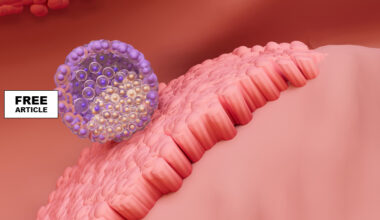
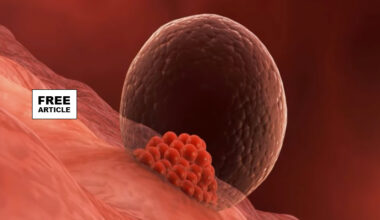
In early pregnancy, the fate of the corpus luteum is fundamentally different. After implantation, trophoblastic cells of the developing embryo secrete human chorionic gonadotropin (hCG), a hormone structurally similar to LH. hCG rescues the corpus luteum from regression and maintains its steroidogenic activity; the structure is then referred to as the corpus luteum of pregnancy. Sustained progesterone production is essential during the first trimester: it keeps the endometrium decidualized (differentiated endometrial cells that support pregnancy), suppresses uterine contractions, modulates maternal immune tolerance toward the embryo, and supports early placental development. The corpus luteum also contributes estrogen, which promotes uterine growth and increases uteroplacental blood flow.
In early pregnancy, rising progesterone from the corpus luteum rapidly transforms the character of cervical mucus into a thick, tenacious barrier that helps prevent additional sperm or microorganisms from entering the uterus. The biological purpose of this progesterone-induced thickening is twofold. First, it prevents further sperm from ascending into the reproductive tract after fertilization has already taken place, ensuring that only the ovulated oocyte has the opportunity to be fertilized and reducing the risk of multiple competing fertilization events. Second, the mucus plug serves as an immunologic and antimicrobial shield. It contains antibodies, defensins, and other protective proteins that limit the ascent of bacteria from the vagina, thereby safeguarding the newly implanted embryo and the sterile uterine environment. This protective barrier persists throughout pregnancy, gradually becoming even more substantial as progesterone levels rise, and is typically expelled only in the days preceding labor when cervical remodeling begins.
By approximately ten to twelve weeks of gestation, the developing placenta matures sufficiently to assume the production of progesterone and estrogen in what is known as the luteal-placental shift. As placental steroidogenesis rises, the corpus luteum gradually becomes less critical and eventually regresses, although remnants may persist in the ovary throughout pregnancy. Failure of the corpus luteum to produce adequate progesterone, termed luteal phase deficiency, can impair implantation or lead to early miscarriage, which is why exogenous progesterone is sometimes used in assisted reproduction or in women with recurrent pregnancy loss.
Maintenance of Uterine Quiescence in Late Pregnancy
Progesterone administration maintains uterine quiescence in late pregnancy and delays delivery, particularly in patients with short uterine cervixes. Recent meta-analysis proved that vaginal progesterone decreases the risk of preterm birth and improves perinatal outcomes in singleton gestations with a mid-trimester sonographic cervical length ≤25 mm.
Birth Control
In combined oral contraceptive pills, the doses of estrogen are not sufficient to prevent ovulation. However, the progestin component, or in the case of minipills, progestin alone, suppresses GnRH Gonadotropin Releasing Hormone secretion from the hypothalamus, leading to decreased FSH and LH release from the anterior pituitary gland.
The estrogen component potentiates the action of progestin and stabilizes the endometrium reducing breakthrough bleeding. Progestins may prevent implantation because of their atrophic effect on the endometrium. Moreover, progestins minimize sperm penetration by enhancing the development of thick cervical mucus.
Hormone Replacement Therapy
Conventional hormone replacement therapy (HRT) includes estrogen and progesterone treatment to mimic hormones created by the human ovary. Hormone replacement can be used in women with premature ovarian failure, menopause, and secondary (pituitary) or tertiary (hypothalamic) hypogonadism.
Progestins, along with estrogen, can be used in postmenopausal women with an intact uterus for hormone replacement therapy to relieve the symptoms associated with menopause (vasomotor symptoms or genitourinary symptoms) and to prevent osteoporosis. Estrogen alone will cause the endometrial lining to grow, so a woman with an intact uterus must have progestogen with estrogen to protect her uterus from endometrial hyperplasia or malignancy.
In summary, Progesterone is necessary for successful embryo implantation and pregnancy maintenance. Vaginal progesterone treatment minimizes the risk of recurrent miscarriage and decreases the risk of preterm birth, saving many fetal lives. Oral progestins protect the endometrium from hyperplasia and malignancy in Hormone Replacement Therapy.
Sources
https://www.ncbi.nlm.nih.gov/books/NBK558960/
https://pmc.ncbi.nlm.nih.gov/articles/PMC8538505/