Uterine Cancer Underdiagnosed and Fatal

0 Shares
0
0
0

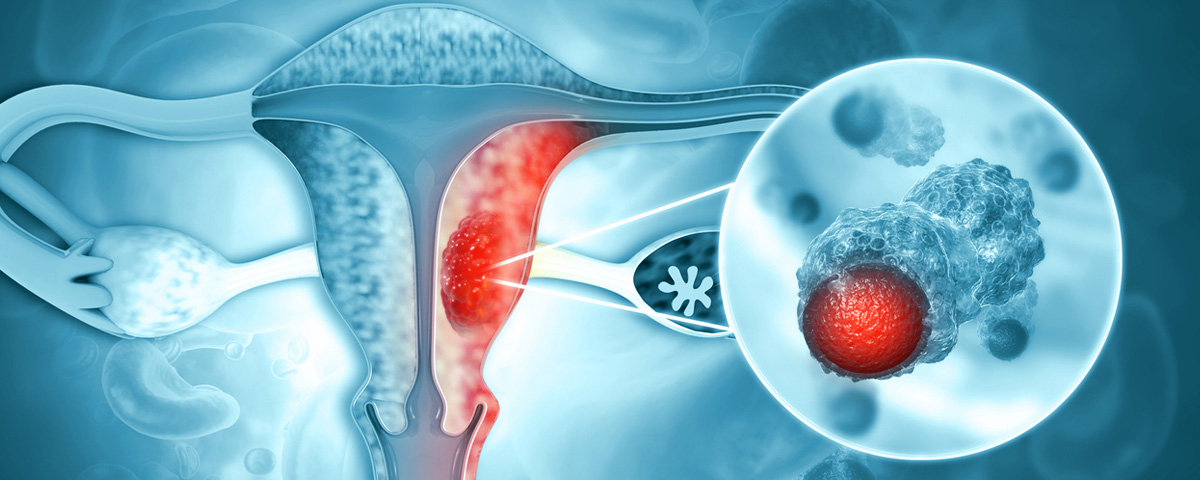
Uterine cancer deaths could soon outnumber deaths from ovarian cancer. Uterine cancer will affect about 66,200 women in 2023 in the U.S. — and around 13,000 will die from the disease annually. Uterine cancer, also known as womb cancer, refers to cancers that develop in the uterus. The most common type is endometrial which originates in the lining of the uterus, the endometrium and account for about 95% of all cases; uterine sarcoma, which is a rarer type, develops in the muscles or other tissues of the uterus. The average age at diagnosis is 65 years old. The risk factors for uterine cancer include older age, obesity, diabetes mellitus, never having been pregnant, late menopause, unopposed estrogen intake, a history of breast cancer, and the use of tamoxifen.

Endometrial cancer is closely linked to estrogen levels especially unopposed estrogen. Unopposed estrogen occurs in obese women because androgens found in adipose (fat) tissue is converted to estrogens by the enzyme aromatase. Paradoxically, tamoxifen which is an antiestrogen in the breast and is used to treat breast cancer acts as an unopposed estrogen in endometrium and can cause endometrial cancer while being used to treat breast cancer. Early menarche and late menopause increase lifetime expose to estrogen and increase the risk of endometrial cancer.

The predominant symptom of endometrial cancer is postmenopausal uterine bleeding, but abnormal uterine bleeding in pre- or perimenopausal women can also occur. Keeping in mind that most cases of postmenopausal bleeding are due to benign causes and only 10–15% are malignant. One out of eight postmenopausal women, suffering from uterine bleeding, will ultimately be diagnosed with endometrial cancer.

All women with abnormal uterine bleeding should undergo proper clinical and gynecological examination, which should be supplemented by transvaginal ultrasonography. Endometrial thickness ≥ 5 mm is the cut-off point indicating further investigation for postmenopausal women. The gold standard for endometrial biopsy and histological confirmation of endometrial cancer are curettage (D&C) and hysteroscopy, but some imaging methods (CT, MRI) can provide useful information about myometrial invasion, (the muscle of the uterus) cervical involvement, lymph node status, and regional or distant metastasis.

Although endometrial cancer management remains challenging, a deeper understanding of the genetic diversity as well as the drivers of the various pathogenic states of this disease has led to development of divergent management approaches in an effort to improve therapeutic precision in this complex malignancy. Depending on the nature of the cancer progestins, aromatase inhibitors and Selective Estrogen Receptor Modulators SERMs may be prescribed.

https://www.insideprecisionmedicine.com/topics/oncology/endometrial-cancer-phase-iii-shows-molecular-profiling-personalizes-treatment/


0 Shares
Leave a Reply

Your email address will not be published. Required fields are marked *

You May Also Like

CancerBreast Density and Breast Cancer Risk

Among all risk factors, breast density is the most important predictor of breast cancer risk. Increase in breast cancer risk from lowest to highest breast density category is on the order of fivefold depending on the age of the patient, with greater relative risk in older women. Mammographic density, when added to the factors used in predictive models, increase the power of prediction and thus is independent of other risk factors.
Breast Cancer and Estrogen

CancerLocal Production of Estrogen in Breast Cancer

Estrogen is a key hormone influencing the growth and development of breast cancer, particularly in tumors expressing estrogen receptors (ER+). While estrogen doesn't cause breast cancer, it can act locally within the breast tissue to stimulate the proliferation (growth and division) of cancer cells, playing a significant role in tumor development and progression. 

CancerWhy Estrogen Receptor Positive Metastatic Breast Cancer Stops Responding to Therapy

Between 5% and 10% of all breast cancers are metastatic at diagnosis, and 20%-30% of patients diagnosed with early-stage breast cancer eventually progress to the metastatic stage. The most common type of metastatic tumor is estrogen receptor-positive (ER+) and human epidermal growth factor receptor 2-negative (HER2-), representing 68% of metastatic tumors.
Triple Negative Breast Cancer

CancerBreakthroughs in Triple-Negative Breast Cancer (TNBC) Management

Triple-Negative Breast Cancer (TNBC) is a subtype of breast cancer lacking estrogen receptor (ER), progesterone receptor (PR), and human epidermal growth factor receptor 2 (HER2) expression. Comprising 15–20% of breast cancers, TNBC is typically high-grade, affecting mainly premenopausal women, and individuals with inherited gene alterations, such as the Breast Cancer Susceptibility Genes 1and 2 (BRCA 1and 2) mutations.  At diagnosis the tumor demonstrates aggressive biological behavior with a proclivity to be higher grade, often has lymph node involvement at diagnosis, and a tendency to metastasize even after curative treatment. TNBC has a poor prognosis when compared with other Breast cancer subtypes.
Removal of Fallopian Tube

FertilityRemoval of the Fallopian Tubes (Salpingectomy) May Preserve Fertility and Prevent Ovarian Cancer Particularly in BRCA-Positive Women

Ovarian cancer is one of the leading causes of cancer deaths among women. A woman's risk of getting ovarian cancer during her lifetime is about 1 in 91. Her lifetime chance of dying from ovarian cancer is about 1 in 143. This cancer mainly develops in older women. About half of the women who are diagnosed with ovarian cancer are 63 years or older.
Cancer Vaccines

VaccinesImmunization Part 3 – The future Of Personalized Cancer Vaccines

The integration of high-throughput technologies and big data analytics is revolutionizing vaccine research.  Multi-omics approaches—such as transcriptomics, proteomics, and metabolomics—enable a deeper understanding of immune responses at a cellular and molecular level. AI and machine learning algorithms further enhance vaccine design by predicting antigenic targets and optimizing formulations.