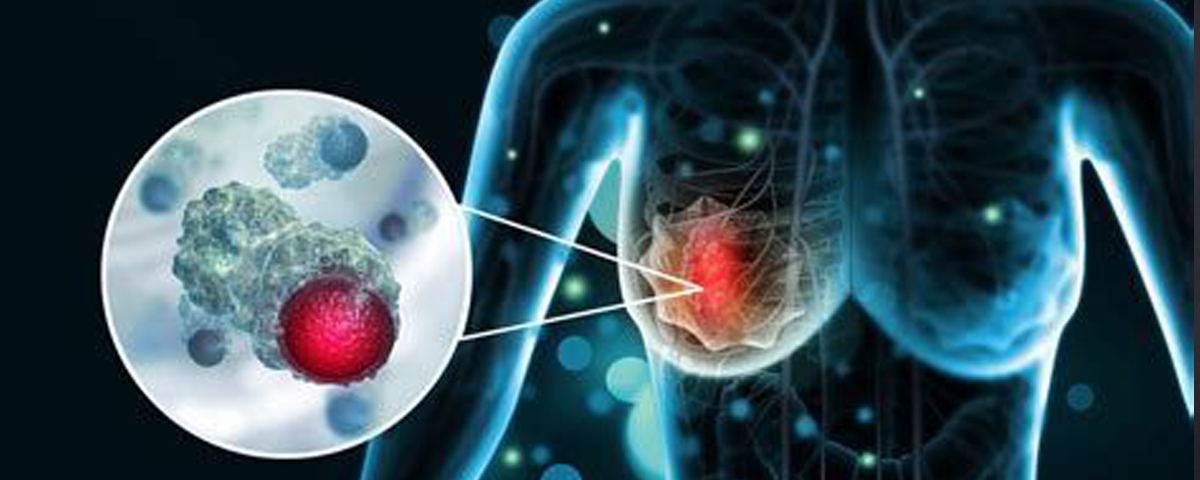
Triple-Negative Breast Cancer (TNBC) is a subtype of breast cancer lacking estrogen receptor (ER), progesterone receptor (PR), and human epidermal growth factor receptor 2 (HER2) expression. Comprising 15–20% of breast cancers, TNBC is typically high-grade, affecting mainly premenopausal women, and individuals with inherited gene alterations, such as the Breast Cancer Susceptibility Genes 1and 2 (BRCA 1and 2) mutations. At diagnosis the tumor demonstrates aggressive biological behavior with a proclivity to be higher grade, often has lymph node involvement at diagnosis, and a tendency to metastasize even after curative treatment. TNBC has a poor prognosis when compared with other Breast cancer subtypes.
For decades, treatment of Triple Negative Breast Cancer has been based on surgery and post-surgical adjuvant chemotherapy for the reduction of disease recurrence. Conventional cytotoxic chemotherapy has represented the backbone of systemic treatment in the early TNBC, including neoadjuvant treatment, which is used prior to surgery to reduce tumor size thus increasing the chances that breast-conserving surgery will be sufficient.
The development of novel therapeutic approaches has been difficult, due to the heterogeneity of TNBC and lack of exploitable therapeutic targets. Nevertheless, immunotherapy and poly (ADP-ribose) polymerase (PARP) inhibitors have shown significant survival benefits in recent studies.
Specifically, combinations of immune checkpoint inhibitors (ICIs) with chemotherapy or other alternative therapeutic compounds are emerging as successful therapeutic approaches in the management of TNBC patients. Despite the progress with immune checkpoint inhibitors; representing a notable milestone in TNBC treatment, additional investigations are necessary to tackle the issue of diversity comprehensively. A profound comprehension of tumor subtypes, alongside that of the tumor microenvironment (TME) in terms of molecular, genetic, and immune aspects, would amplify the potential for developing targeted immunotherapy to achieve superior therapeutic effectiveness, in TNBC.
TNBC is a highly heterogeneous group of breast cancers that includes tumors of different histological types, each with distinct molecular drivers and consequently varying prognoses and treatment responses.
Immunotherapy for the treatment of Triple Negative Breast Cancer
For tumors expressing PD-L1 – Immune Checkpoint Inhibitors (ICI)
- Atezolizumab + nab-paclitaxel (Abraxane)
- Pembrolizumab (Keytruda) is FDA-approved in combination with chemotherapy in both early-stage and metastatic PD-L1+ TNBC.
PARP Inhibitors (for BRCA-mutated TNBC)
- Target cancer cells with defective DNA repair
- Olaparib (Lynparza) or Talazoparib (Talzenna) approved for BRCA1/2 mutations
Antibody-Drug Conjugates
- Target cancer cells with high precision:
- Sacituzumab govitecan (Trodelvy): Approved for metastatic TNBC after prior treatments
- Delivers chemo directly to cancer cells via an antibody
The management of triple-negative breast cancer (TNBC) has seen notable advancements because of the identification of new therapeutic targets and successful integration of immunotherapy in neoadjuvant treatment. In the next few years, it will be necessary to design new prospective clinical trials and wait for the results of those in progress, for a better knowledge of the efficacy of these combination therapies. Therapeutic sequences and new target drugs for the treatment of a disease which up to a few years ago was considered “un-targetable” is now within reach. This should be accompanied by a commitment to biomarker discovery, which could help the oncologist make the best decision for patient care.