The Yin and the Yang of Reproductive Medicine
Endometriosis is driven by relatively low levels of prenatal and postnatal testosterone. Testosterone affects the developing hypothalamic–pituitary–ovarian (HPO) axis (defined below), and at low levels and it can result in an altered trajectory of reproductive and physiological phenotypes that can mediate the symptoms of endometriosis. A phenotype is defined as a person’s observable characteristics resulting from the interaction of their genetic makeup and the environment. Polycystic ovary syndrome, by contrast, is known to be caused primarily by high prenatal and postnatal testosterone, and it demonstrates a set of phenotypes that are diametrically opposite to those found in endometriosis.
The hypothesis that endometriosis risk is driven by low prenatal testosterone and involves expression of several reproductive phenotypes is supported by a suite of evidence from genetics, development, endocrinology, morphology, and life history. This hypothesis also provides insights into why these two disorders, PCOS and endometriosis, diametrically opposed fitness-reducing disorders, are maintained with such high frequencies in human populations. Both afflict approximately 10% of the female population.
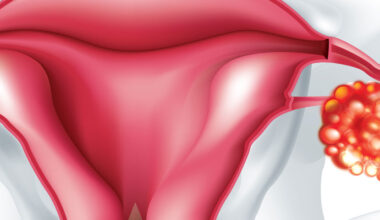
The female reproductive cycle (usually called the menstrual cycle) is controlled by a neuroendocrine cascade involving the hypothalamus, pituitary gland, and ovaries (HPO axis). A neuronal clock located in the hypothalamus releases intermittent Gonadotropin-Releasing Hormone (GnRH) that induces the release of the gonadotropins (hormones that stimulate the production of sex hormones estrogen and progesterone in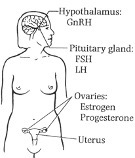 the ovaries) specifically, Luteinizing Hormone (LH) and Follicle Stimulating Hormone (FSH) from the anterior pituitary. FSH and LH are responsible for the growth and maturation of the egg containing ovarian follicle via the timed production of estrogen and progesterone by the ovary (ovarian cycle). Estrogen and progesterone also promote cyclic changes in the endometrium, the lining of the uterus (menstrual cycle).
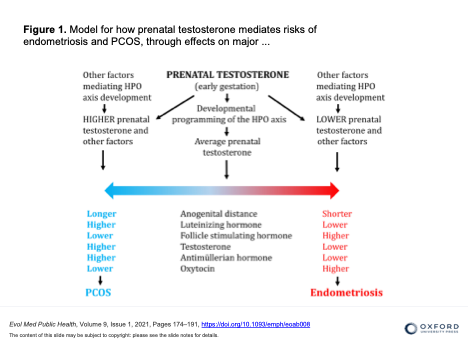
Prenatal testosterone impacts the female HPO axis, potentially leading to early dysregulation and increased risks for endometriosis and PCOS. Testosterone is present and active prenatally among female offspring because of production from fetal and maternal adrenal glands, maternal ovaries and maternal fat tissue, with these maternal sources reaching the fetus via the placenta.
Among both female and male offspring, prenatal testosterone levels have been linked with two main anatomical metrics. Anogenital distance (AGD) which is measured from the scrotal base to the anus in males, or from the vaginal end to the anus in females and is generally longer in males. Longer AGD is strongly associated with higher prenatal testosterone in both sexes. A second metric of prenatal testosterone is the ratio of the 2nd to the 4th finger length (2D4D digit ratio) which is lower among males than females, and lower digit ratio indexes reflect higher prenatal testosterone within each sex as well.
As expected from the above, female offspring with a shorter anogenital distance and longer 2nd to 4th finger ratio are predisposed to endometriosis. Female offspring with a longer anogenital distance and a lower 2nd to 4th finger ratio are predisposed to PCOS.
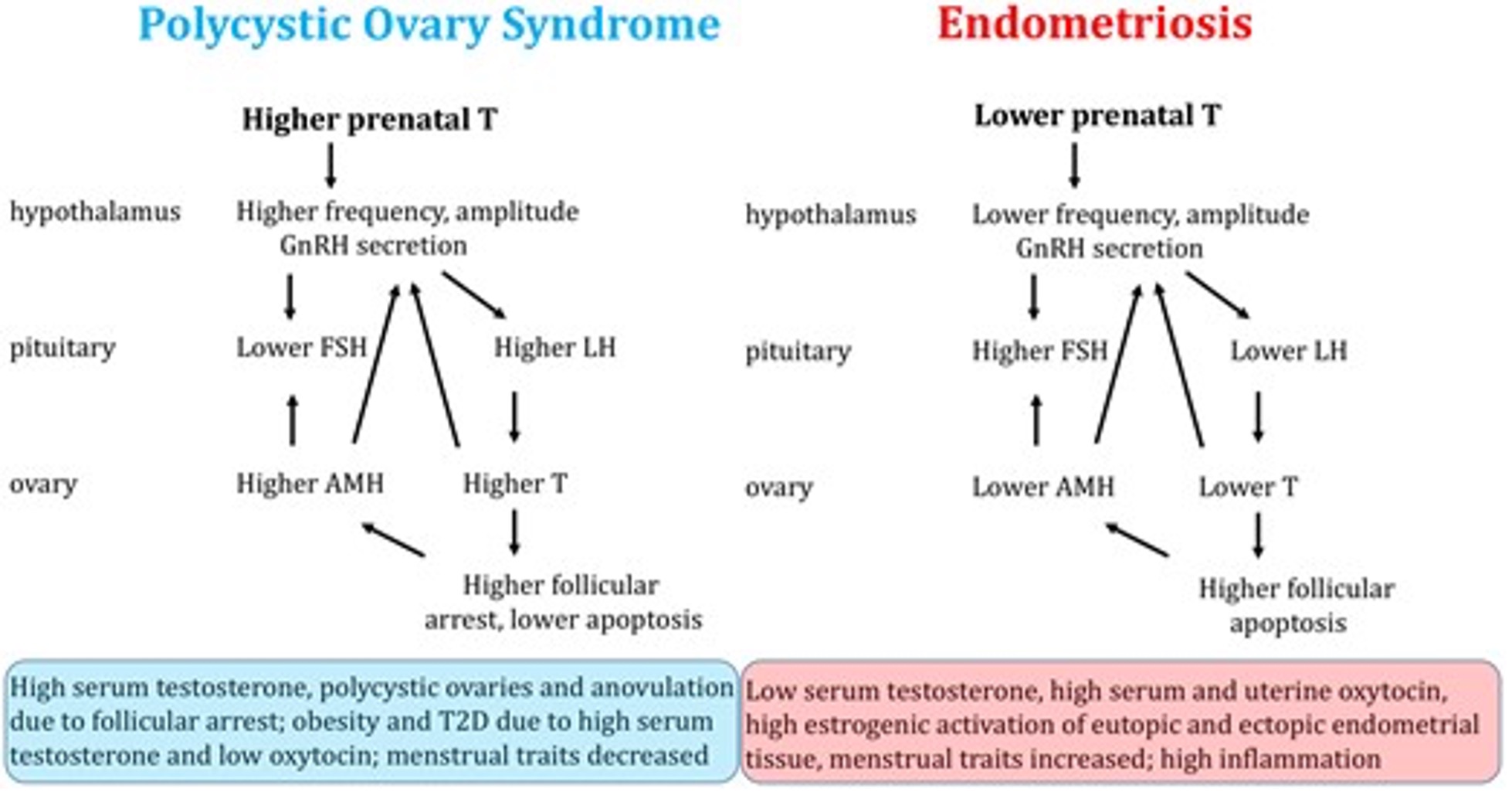
Most notably, women with endometriosis exhibit, relative to controls (women who do not suffer from this disorder): (1) shorter AGDs, indicative of lower prenatal testosterone (2) lower LH relative to FSH, (3) higher Sex Hormone Binding Globulin – SHBG, (4) higher serum oxytocin, (5) lower ovarian and serum testosterone, (6) lower Anti-Mullerian Hormone AMH, (7) lower Waist to hip ratio WHR and BMI, (8) lower β-endorphin and (9) a suite of other differences, all of which are opposite to the differences found between PCOS versus controls.
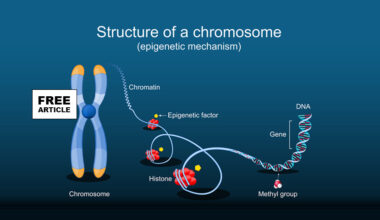
As can be seen in the above chart women with PCOS exhibit, relative to controls the exact opposite of endometriosis on every parameter do to the higher levels of testosterone. The divergent prenatal characteristics related to prenatal testosterone can be explained by the epigenetic profile of the female offspring. Epigenetic changes are known to be inherited changes in gene expression that take place without changing the DNA sequence underneath. In simpler terms, it is about how gene expression can be turned on or off or dialed up or down without altering the genetic code itself. These changes are stable, heritable, and carry over to cell division, allowing the spread of cell lineages to be altered.
ENDOMETRIOSIS
Several studies reported a significant difference between specific genes’ methylation levels in endometrial biopsies and normal tissue, which suggests that DNA methylation may play an important role in the modulation of the genotype in endometriotic tissue. These studies identified an association between endometriosis and hypermethylated genes, including the PGR-B, SF-1, and RASSF1A. The genes HOXA10, COX-2, IL-12B, and GATA6 were found to be hypomethylated in endometriotic tissue by several studies. Acetylation and methylation are the two key histone modifications leading to differential gene expression in endometriotic tissues.
PCOS
While genetics contributes to PCOS, it doesn’t fully explain its variability. Epigenetic changes—heritable but reversible modifications that affect gene expression without altering DNA sequence—are now recognized as critical in its development and progression. Specifically, it is responsible for the high levels of pre- and post-natal testosterone.