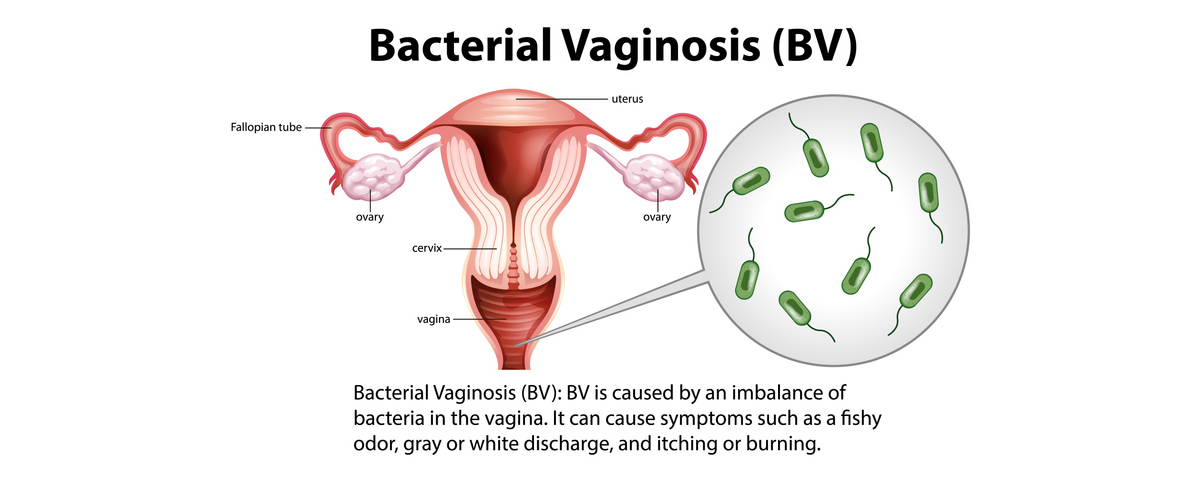
Bacterial vaginosis (BV) is caused by an imbalance of the naturally occurring vaginal flora, characterized by both a change in the most common type of bacteria present as well as an increase in the total number of bacteria present. Lactobacillus species dominates normal vaginal microbiota. Bacterial vaginosis is associated with a decline in the overall number of lactobacilli. Most bacterial vaginosis infections start with the organism Gardnerella vaginosis, which creates a biofilm that subsequently provides a conducive environment for the proliferation of other opportunistic bacteria. G vaginalis also produces vaginolysin, a pore-forming toxin affecting human cells. Vaginolysin is a cholesterol-dependent cytolysin that initiates complex signaling cascades that trigger target cell lysis and enhances Gardnerella virulence.
Bacterial Vaginosis (BV) is wide spread affecting an estimated 29% of women of reproductive age. BV is more common in Black and Hispanic women and is also very common during pregnancy.
Gardnerella has the necessary virulence factors that facilitate its adherence to host epithelial cells, the cells that line the vagina, enabling it to effectively compete with Lactobacillus for dominance within the vaginal environment. The symptoms of bacterial vaginosis are believed to arise from the proliferation of usually dormant vaginal anaerobes, organisms that grow without oxygen, and establish symbiotic relationships with Gardnerella. For approximately 40 years, G vaginalis stood as the only recognized species within the Gardnerella genus. More recently, as many as 13 new species have been identified, including G leopoldii, G piotii, and G swidsinskii.
The association between bacterial vaginosis and an increased risk of acquiring future Sexually Transmitted infections stems from the fact that bacterial vaginosis allows other vaginal pathogens to gain access to the upper genital tract. Bacterial vaginosis is also responsible for the presence of enzymes that reduce the ability of host leukocytes, white blood cells, to fight infection and for an increased release of endotoxins that stimulate cytokine and prostaglandin production within the vagina.
Bacterial vaginosis (BV) is often associated with an elevated vaginal pH level, specifically a pH above 4.5. Normal vaginal pH is generally between 3.8 and 4.5, and facilitates the growth of beneficial bacteria like lactobacilli. When BV develops, the balance of bacteria shifts, causing an increase in pH and the overgrowth of other, often anaerobic, bacteria. Most women with bacterial vaginosis present with a complaint of malodorous fishy vaginal discharge. Often, this symptom becomes more pronounced after sexual intercourse. Semen is slightly alkaline with a pH of 7.2 to 7.4. This alkalinity tends to raise the pH in the vagina and contribute to BV ability to replace lactobacillus with Gardnerella. Additional symptoms may include painful urination, uncomfortable sex, and vaginal pruritus; however, many affected individuals may be asymptomatic. Some possible risk factors for bacterial vaginosis include vaginal douching, multiple sexual partners, recent antibiotic use, cigarette smoking, and the use of an intrauterine device.
The diagnosis of bacterial vaginosis is typically suggested clinically and confirmed by obtaining a swab of the vaginal discharge and creating a wet mount slide to view under a microscope. With bacterial vaginosis, the swab may demonstrate a higher than normal vaginal pH (>4.5), the presence of clue cells on a wet mount and a positive whiff test result. To determine the vaginal pH, pH paper can be utilized and compared to color controls. A drop of sodium chloride (NaCl) solution is placed on the wet mount slide to identify clue cells. The slide is covered with a cover slip and examined under the microscope to visualize the characteristic clue cells. Clue cells are epithelial cells of the cervix embedded with rod-shaped bacteria.
The whiff test is performed by adding a small amount of potassium hydroxide (KOH) to the microscopic slide containing the vaginal discharge. The whiff test result is positive if a characteristic fishy odor is revealed. Typically, 2 of these positive tests, in addition to the presence of the characteristic discharge, are enough to confirm the diagnosis of bacterial vaginosis. If no discharge is present, all 3 of these criteria are needed to make the diagnosis.
Bacterial vaginosis can be treated with either clindamycin or metronidazole. Both of these medications are effective if taken by mouth or applied vaginally. Both are safe to use in pregnant patients. Initial treatment for bacterial vaginosis demonstrates notable efficacy, cure rates within 1 month typically range from 80% to 90%.
Recurrence of bacterial vaginosis may occur in as many as 80% of women within 9 months following initial treatment. About 10% to 15% of women do not improve after the first course of antibiotics and may require additional treatment. If a patient experiences recurrent symptoms, a second course of antibiotics is generally prescribed.
Probiotics may help in treating bacterial vaginosis (BV) by restoring a healthy balance of bacteria in the vagina, particularly when used alongside antibiotics. While antibiotics are the primary treatment for BV, probiotics, especially Lactobacillus crispatus, can be beneficial in preventing recurrence and maintaining a healthy vaginal microbiome. Studies have shown that probiotics containing lactobacillus can help prevent Bacterial Vaginosis from returning after a course of antibiotic therapy.
In a recent randomized controlled trial, a powder containing the naturally occurring live strain Lactobacillus crispatus was used. Following metronidazole treatment, women utilized the intravaginal powder to reduce the recurrence of bacterial vaginosis. The regimen involved using the powder 4 times daily during the first week, followed by twice-weekly use for 10 weeks. The use of this lactobacilli powder after bacterial vaginosis treatment with metronidazole significantly lowered the recurrence rate of bacterial vaginosis up to 24 weeks after initial treatment.
Studies have suggested that pregnant women who are symptomatic for bacterial vaginosis should be treated before 22 weeks of gestation to reduce the risk of preterm labor. However, no clear consensus has been made on whether to screen for or treat bacterial vaginosis in the general population to prevent adverse outcomes such as preterm birth. To date, screening for bacterial vaginosis in asymptomatic females is not recommended, but testing and treatment of symptomatic females is clearly indicated.
During pregnancy, bacterial vaginosis has been associated with a 2-fold increased risk of preterm delivery (particularly if bacterial vaginosis is diagnosed in the early second trimester) and a 3- to 5-fold increased risk of spontaneous abortion in pregnant women diagnosed with bacterial vaginosis in the first trimester. It has also been shown to increase the risk of chorioamnionitis, premature rupture of membranes, and postpartum endometritis.
Data also suggests an association between bacterial vaginosis and tubal factor infertility, and the prevalence of bacterial vaginosis is significantly higher in infertile females (45.5%) when compared to fertile females (15.4%). Studies have shown that women with bacterial vaginosis who later receive in vitro fertilization have a lower implantation rate and higher rates of early pregnancy loss.
https://www.ncbi.nlm.nih.gov/books/NBK459216/