Fibroids, (Uterine Leiomyomas), the most common benign tumor in women, originate in the muscle of the uterus (myometrium). Evidence from contemporary literature suggests that the prevalence of uterine fibroid varies between 16.7% – 30% of reproductive-age women. No effective treatments other than myomectomy (surgical removal of the fibroid) or hysterectomy (removal of the entire uterus) exist, and approximately 200,000 hysterectomies are performed for fibroids annually, in the United States alone.
There is a two-fold increase in the prevalence of fibroids in African-American women. Also, their incidence tends to peak at the age of 35 years and almost 50% of African- American women will have uterine fibroids by their 5th decade of life. It has been demonstrated that the odds of having severe symptoms from uterine fibroids are more than five times greater in African-American women than in Caucasians. Fibroids usually grow in women of childbearing age, and research suggests that they may shrink after menopause. However, research also shows that they are more likely to shrink in postmenopausal white women than in postmenopausal black women.
Leiomyomas which are also called uterine myomas, uterine fibroids, or fibromyomas are discrete, rounded, firm, white to pale pink, benign myometrial (uterine muscle) tumors composed mostly of smooth muscle with varying amounts of fibrous connective tissues. They are benign neoplasms that contain an increased amount of extracellular collagen, elastin and are surrounded by a thin pseudo-capsule. They may enlarge to cause significant distortion of the uterine surface or cavity.
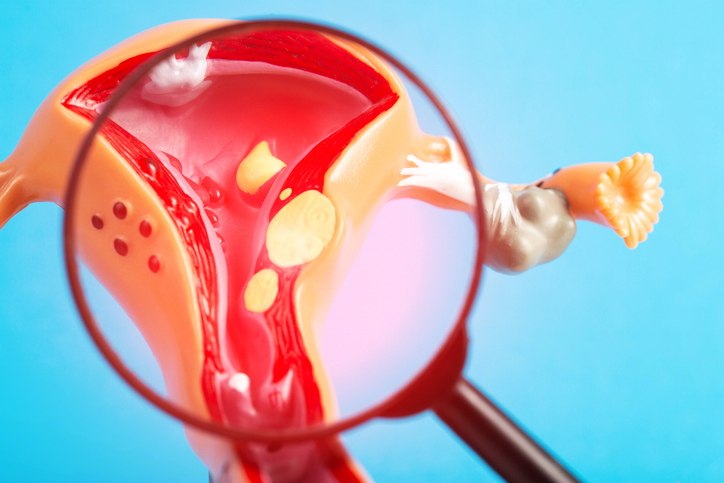
Most fibroids are asymptomatic; and may even be asymptomatic in pregnancy but some may interfere with conception or can cause spontaneous abortion, missed abortions, painful red degeneration or infarction of the fibroid itself, abnormal fetal presentation, obstructed labor, an increased likelihood of premature deliveries, caesarean deliveries, and postpartum hemorrhage. Whereas, in the non-pregnant women fibroids are associated with an irregular menstrual cycle often with heavy menstrual bleeding, infertility, constipation, urinary incontinence and leiosarcoma transformation (rare aggressive cancer). Uterine fibroids can occur in the non-pregnant woman and then continue into pregnancy or may develop de novo in pregnancy.
Fibroid growth is estrogen-dependent, explaining their tendency to appear after onset of puberty and regress after the menopausal transition. The bioactive form of estrogen (17β-estradiol [E2]) promotes the proliferation of fibroids via up-regulation of progesterone receptor expression. Studies have demonstrated that progesterone signaling promotes the growth and proliferation of fibroid cells by increasing proliferating cell nuclear antigen (PCNA) expression., which increases the number of fibroid cells and the size of the fibroid tumor.
Studies have also implicated androgen (male hormones) in the development of uterine fibroids. Obesity is associated with profound alterations in androgen secretion, transport metabolism and action. Additionally, the enzyme Aromatase, which catalyzes the conversion of androgens to estrogen, is overexpressed in fibroid tissue compared to the normal fibroid muscle (myometrium), thus underscoring the potential relationship between androgen and estrogen in fibroid development. The synthesize estradiol (E2) occurs in fibroid tissue via aromatization of androgens via the enzyme aromatase to estrogens (estrone sulfate), subsequent cleavage of estrone-sulfate to free estrone via the enzyme estrone sulfatase, and ultimately conversion of estrone to estradiol via the 17bOH-HSD Type 1 (17bOH-HSD1) enzyme. Estradiol then upregulates progesterone receptor expression increasing the number of fibroid cells and the size of the fibroid tumor.
A number of therapeutic options have been proposed for the medical treatment of fibroids for example “anti-progestin therapy” such as mifepristone (RU-486) which helps shrink fibroids and alleviate symptoms like heavy bleeding and pain by antagonizing progesterone receptors. Given the critical role of estrogen in is not surprising that aromatase inhibitors have been used to reduce the size of fibroids. These therapies are still under investigation and you should consult your physician on how best to treat your symptoms.